
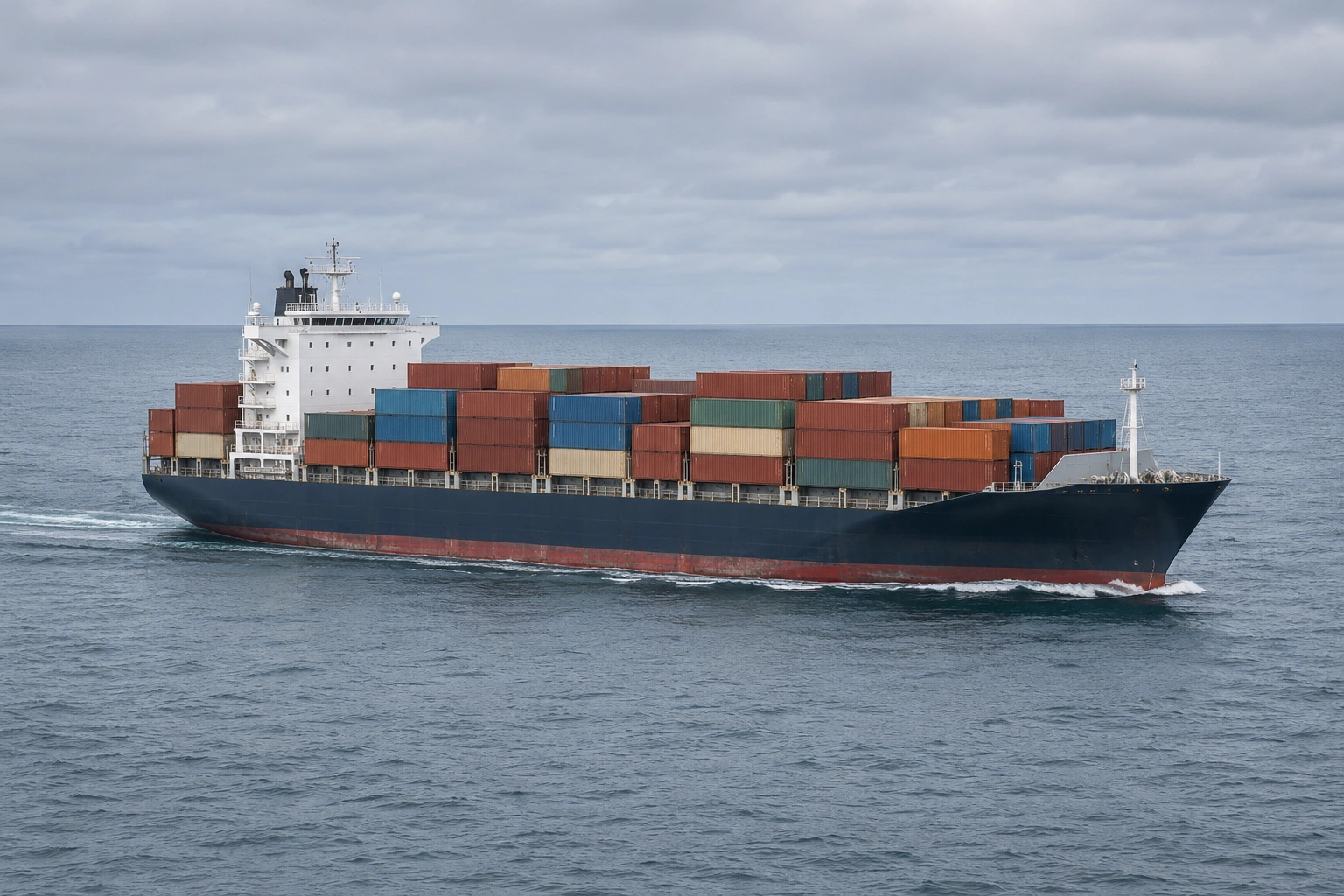
Stock that is on a ship at your year end belongs in your closing stock if control of it has already passed to you. For most purchases from China on FOB, FCA, EXW or CIF terms, that happens when the goods are collected or loaded, so a container at sea on your year end is usually yours. Include it at the cost incurred so far, with a matching supplier balance or accrual. Under DDP or DAP terms the goods are still the supplier's until they arrive, so anything you have paid is a prepayment, not stock. Duty and import VAT are not due until the goods are imported.
When the Goods Become Yours
FRS 102 recognises an asset when you control it, meaning you can direct its use and obtain its benefits. For stock at sea, the clearest evidence is who carries the risk of loss, which is set by the Incoterm in your purchase order, alongside the bill of lading and who insured the shipment.
| Incoterm | Where risk passes to you | Goods at sea at your year end |
|---|---|---|
| EXW | When the goods are made available at the supplier's premises | Your stock |
| FCA | When the goods are handed to your carrier | Your stock |
| FOB | When the goods are on board the vessel | Your stock |
| CFR or CIF | On board the vessel, even though the supplier pays the freight | Your stock |
| DAP or DDP | At the destination | The supplier's stock |
Two points catch sellers out. Incoterms deal with delivery and risk, not legal title; the ICC's own guidance stresses that title is a separate question for the contract. And the American phrases FOB shipping point and FOB destination are not Incoterms. A UK purchase order that says FOB Shenzhen means risk passes when the goods are loaded at Shenzhen.
 Preetesh Parmar FCCADirector, Tidy Money Ltd (EcomAccountants.uk)
Get E-commerce Accounting Help
We specialise in UK online sellers across Amazon, Shopify, eBay, Etsy, and TikTok Shop. Tell us about your business and get a fixed quote within 24 hours. No obligation.
What Goes Into the Cost
FRS 102 includes in the cost of stock the purchase price, import duties and the transport, handling and other costs of getting it to its present location. For goods at sea at the year end that means the supplier price plus any freight and insurance you have incurred or are committed to for that voyage. Recoverable VAT is not part of cost, and nor are storage and selling costs, so FBA fees and 3PL storage stay in overheads. The same rules build the landed cost per unit once the goods arrive.
Deposits, Balances and Accruals
Many China suppliers ask for 30% when the order is placed and the balance before shipping. Until the goods are delivered under the agreed Incoterm, every payment is a payment on account, shown as a prepayment on the balance sheet. It becomes stock when control passes.
| Position at the year end | Debit | Credit |
|---|---|---|
| Deposit paid, goods still in production | Prepayment | Bank |
| FOB goods loaded, balance unpaid | Stock in transit | Supplier |
| FOB goods loaded, deposit already paid | Stock in transit | Prepayment and Supplier |
| Freight for loaded goods not yet invoiced | Stock in transit | Accruals |
| DDP goods at sea, fully paid | Prepayment | Bank |
Suppliers usually invoice in US dollars. Translate the purchase at the rate on the date control passes, and retranslate any unpaid dollar balance at the year-end rate, with the difference treated as an exchange gain or loss rather than an adjustment to the stock value.
Duty and Import VAT
Goods still at sea have not been imported, so no customs duty or import VAT is due on them yet. When they arrive, the duty is added to the stock cost. If you use postponed VAT accounting, HMRC's guidance puts the import VAT on the VAT return for the period covering the date of import, as both output and input tax, so it nets to nil and never touches the stock value. Your monthly postponed import VAT statement is the evidence, and it has to be downloaded within six months.
Getting Cut-Off Right
The purchase and the stock must sit on the same side of the year end. If you book a supplier invoice for loaded goods but leave the goods out of closing stock, profit is understated by the cost of the goods. If you count the goods but miss the invoice or accrual, profit is overstated. Corporation Tax follows the accounts, so either mistake changes the tax bill.
Suppose your year ends on 31 March and a £40,000 FOB container is loaded in Ningbo on 20 March, arriving at Felixstowe on 28 April. The £40,000, plus the freight accrued for that sailing, goes into closing stock at 31 March, with the unpaid balance as a creditor. The duty is added in April when the goods are imported.
This matters more than it did a few years ago. Red Sea diversions have added roughly two weeks to many Asia to Europe sailings, so more stock is at sea on any given date. For accounting periods beginning on or after 1 January 2026, the updated FRS 102 also frames assets and revenue around control, the same test used above. Our ecommerce bookkeeping service tracks open purchase orders, shipping documents and Incoterms so the year-end cut-off is supported rather than estimated.
Questions Sellers Ask About Goods in Transit
Should goods in transit be included in closing stock?
Yes, if control has passed to you by the year end, which under EXW, FCA, FOB, CFR and CIF terms happens at collection or loading. Under DAP and DDP terms they remain the supplier's until delivery.
Is a deposit paid to a supplier stock?
No. It is a payment on account, shown as a prepayment, until the goods are delivered under the agreed Incoterm.
Does FOB mean the goods are mine once they are on the ship?
Under Incoterms 2020, risk passes when the goods are on board the vessel, so in practice they are usually your stock from that point. Check the contract for anything that keeps title with the supplier until payment.
Do I include freight in the stock value?
Yes. Freight, insurance, duty and handling to bring the goods to your warehouse are part of the cost of stock. Recoverable VAT, storage and fulfilment fees are not.
Preetesh Parmar FCCADirector, Tidy Money Ltd (EcomAccountants.uk)Get E-commerce Accounting Help
We specialise in UK online sellers across Amazon, Shopify, eBay, Etsy, and TikTok Shop. Tell us about your business and get a fixed quote within 24 hours. No obligation.
E-commerce Accountants UK
Specialist E-commerce Accountants
This article provides general information. Tax treatment depends on your circumstances; check the linked guidance and get advice on your records before filing.