

Cross-border VAT starts with the supply chain. A UK store, EU customer and overseas supplier can create several separate transactions. Identify each party, goods location and selling channel before deciding who charges tax or files a return.
Map the transaction
- Where is the seller established, and which entity makes the sale?
- Where are the goods when sold and where are they dispatched?
- Is the customer a consumer or a business, and what evidence supports that status?
- Is the sale direct or through a marketplace, and what tax does that platform collect?
- Who imports the goods, under which declaration and delivery terms?
Distinguish the main routes
| Route | Question to resolve |
|---|---|
| UK exports | Which supply is made, and what evidence supports any export VAT treatment? |
| Imports into the UK | Who accounts for import VAT, and do direct-sale or marketplace rules apply? |
| Eligible low-value imports into the EU | Can IOSS be used, and does the seller or marketplace operate it? |
| Goods held in an EU country | Which local obligations and intra-EU sales rules apply? |
| Cross-border services or digital products | Which place-of-supply rules and, where relevant, OSS scheme apply? |
Use HMRC’s guidance on marketplace and direct sales into the UK. Do not apply one £135 rule to every seller and every route.
OSS and IOSS solve different reporting problems
IOSS is an optional scheme for qualifying distance sales of imported goods in consignments with an intrinsic value not exceeding €150, excluding excise goods. It is not a universal registration requirement for every seller shipping to the EU. Marketplace involvement and intermediary requirements need checking. The Union and non-Union OSS schemes cover different supplies; neither automatically replaces local obligations associated with stock held abroad. See the European Commission’s scheme overview.
IOSS concerns VAT, not a promise of duty-free delivery. EU low-value customs rules changed from July 2026. Check the Commission’s current €3 customs-duty and VAT guidance for the applicable conditions instead of reusing the former €150 duty-exemption assumption.
Overseas stock needs its own review
Stock held or moved between fulfilment centres can create local registration and reporting obligations. Map actual locations and movements before opting into a programme. Read Pan-EU FBA local VAT registrations and retain the reports supporting the analysis.
UK import VAT and customs records
C79 and postponed VAT accounting statements support different import VAT processes. Recovery depends on eligibility, the underlying transaction and correct evidence; VAT registration alone is not a guarantee. See UK import VAT records and EORI numbers and customs declarations.
US sales tax is a separate assessment
Do not transfer EU VAT thresholds into US sales tax. State rules, physical presence, economic nexus and marketplace collection each need review. Use the US sales-tax guide for UK sellers as a starting point for the records and questions involved.
Detailed cross-border topics
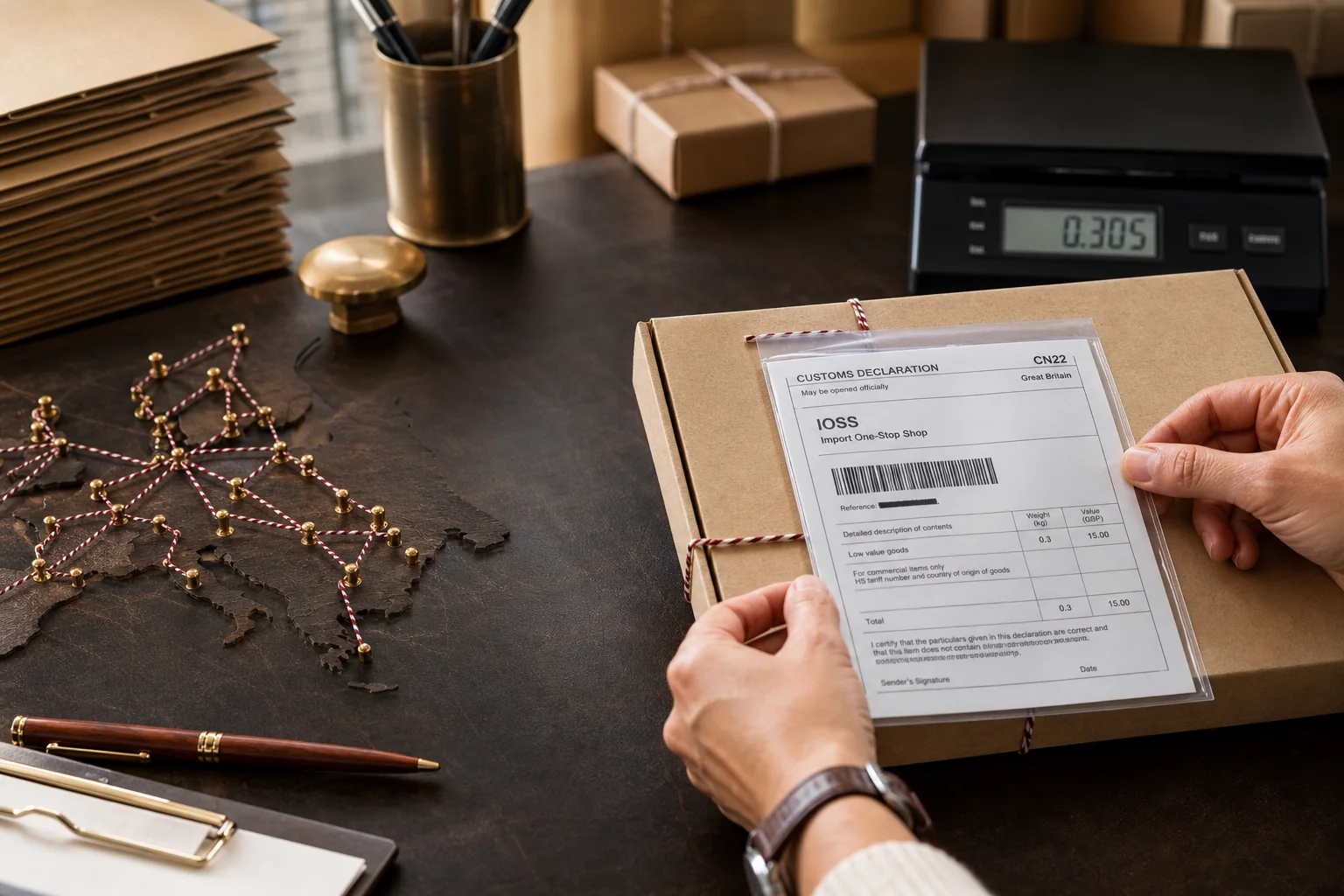
The Import One-Stop Shop (IOSS): Registration, Compliance, and Limits for UK Sellers
IOSS lets UK sellers collect EU VAT at checkout on B2C consignments below €150, clearing them through EU customs without delay. Without IOSS, every package faces import VAT plus a courier handling fee at delivery, which is the single largest abandoned-cart driver for UK sellers shipping into Europe.

Navigating Pan-EU FBA: Triggering Local VAT Registrations in EU Member States
Pan-EU FBA gives a UK seller faster Prime fulfilment and lower fees in exchange for a structural complication: every member state where Amazon stores inventory triggers a separate local VAT registration. Six member states means six monthly returns, six local-language compliance burdens, and registration costs that materially exceed the FBA fee savings for smaller sellers.

Reclaiming UK Import VAT on Freight: Understanding C79 Certificates and PVA
UK e-commerce brands importing stock from China or other non-UK suppliers pay import VAT at the UK border. Two recovery routes: the paper C79 certificate or the Postponed VAT Accounting (PVA) scheme. The cash-flow difference between them runs into tens of thousands of pounds per year for a £500k stock buyer.

US Sales Tax Nexus for UK E-commerce Brands: Economic vs Physical Triggers
US sales tax has no federal rate. Each state sets its own rules, its own threshold, and its own filing cadence. A UK Shopify or Amazon seller can trigger registration in a dozen states without ever realising the line was crossed.
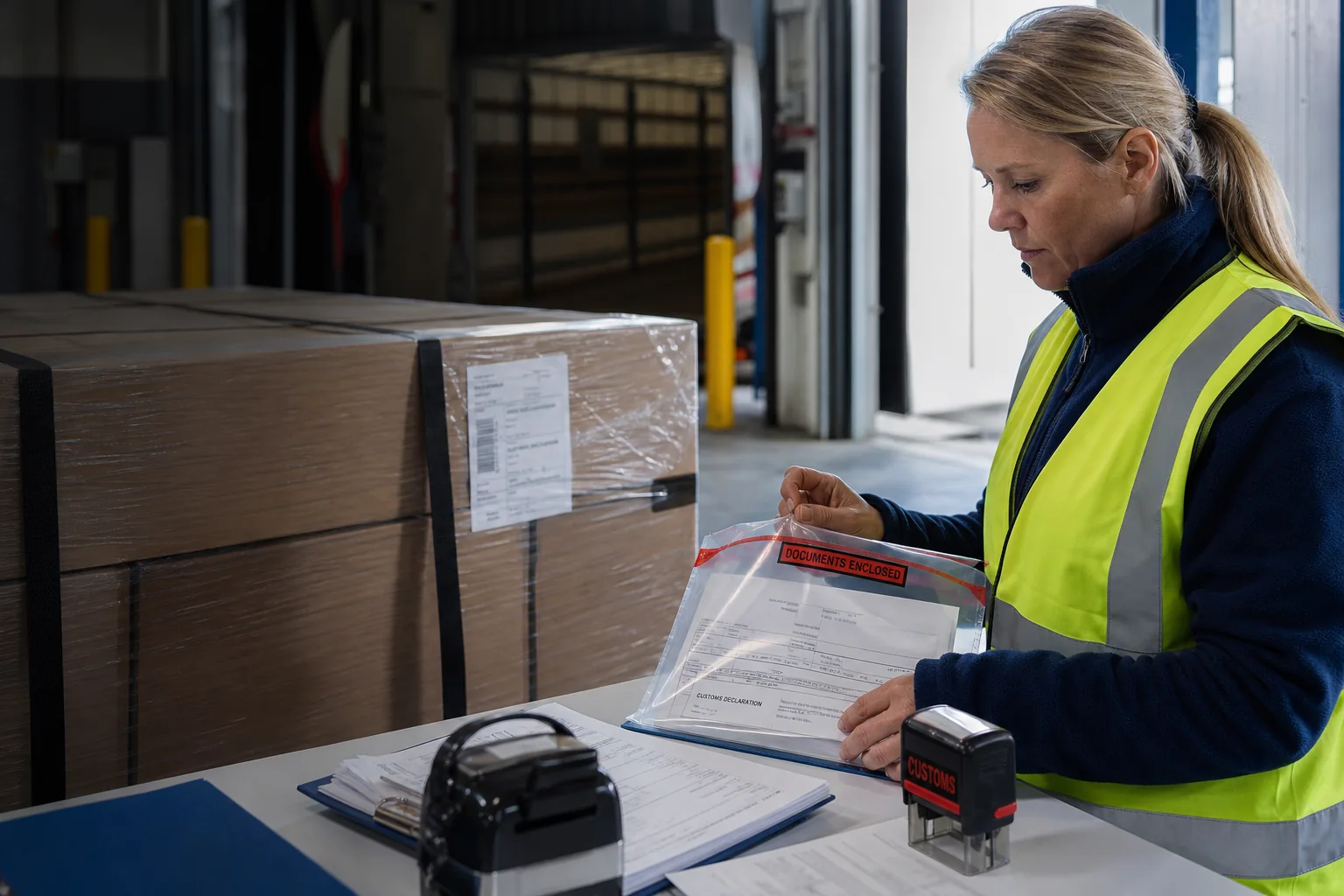
EORI Numbers and Customs Declarations for UK E-commerce After Brexit
Every UK seller importing stock needs a GB EORI number, a customs declaration through the Customs Declaration Service, and a decision on Postponed VAT Accounting. Getting the three set up correctly keeps goods moving and the import VAT off your cash flow.
For a dropshipping route, keep the China-to-UK/EU VAT article alongside this overview. For advice on your own supply chain, see ecommerce tax and VAT services and pricing.
Specialist E-commerce Accountants
General information for UK online sellers. Your accounting and tax treatment depends on your circumstances; confirm the approach for your business before acting.